
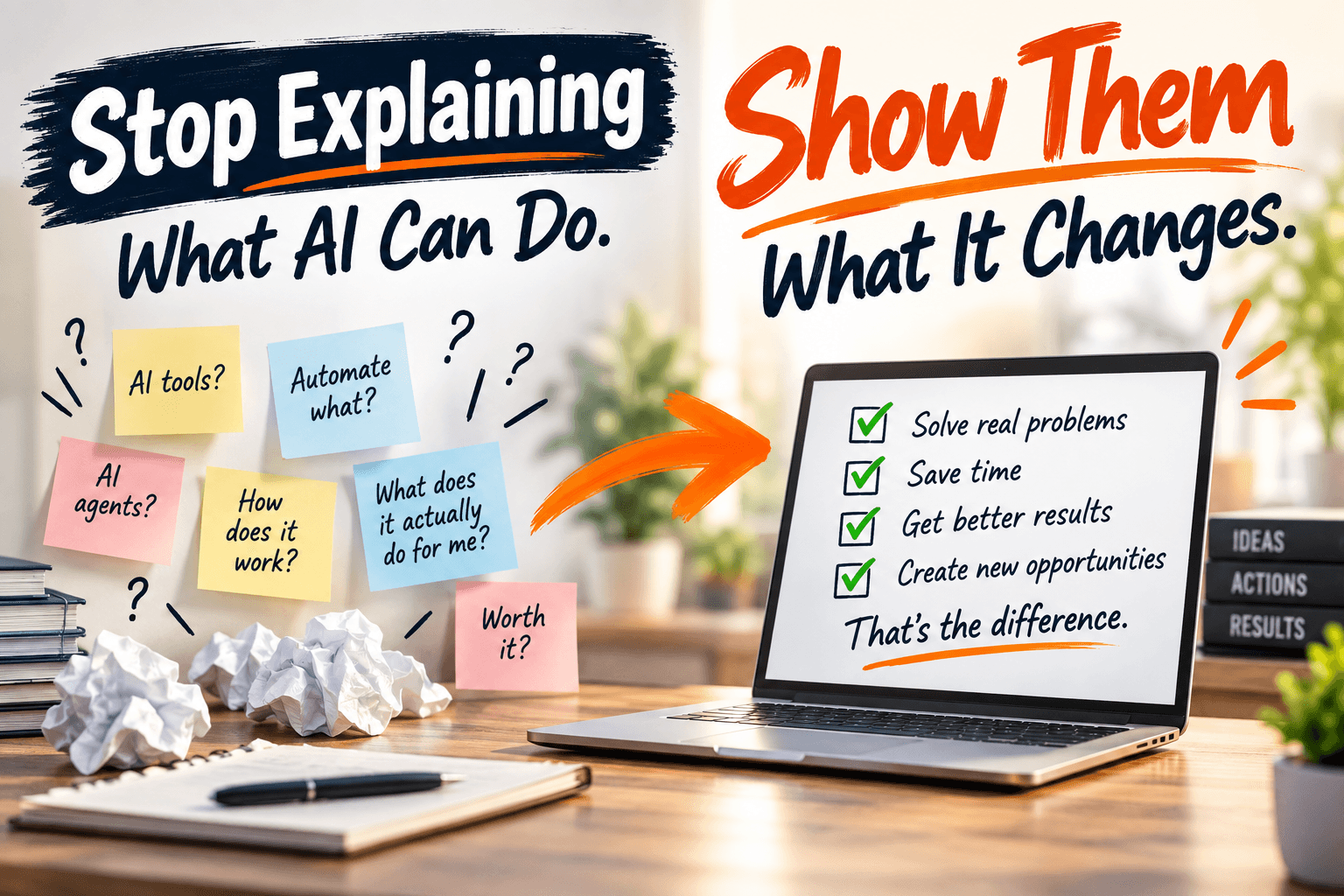
Stop Explaining What AI Can Do. Show Them What It Changes. ~ This week's Self Made Success
A simple shift that makes your offer, recommendation, or content instantly more compelling
As more entrepreneurs try to explain what AI can do for their business or their customers, there's a pattern that keeps showing up.
When someone doesn't seem interested, our first instinct is usually:
"Maybe I didn't explain it well enough."
So... we explain it again.
We find better words.
We add more features.
We describe the technology.
We tell them everything AI is capable of doing.
But maybe the problem isn't the explanation.
Maybe they simply haven't seen AI solve a problem they actually care about.
The Explanation Trap
Here's what happens when we get stuck explaining.
We talk about AI agents. Automation. AI assistants. Workflows. Prompt engineering. Content systems. AI-powered research.
Those are all real things. They describe the solution.
But they don't necessarily describe something the person wakes up worrying about.
Most people aren't lying awake at night thinking, "I really need better prompt engineering."
They're thinking:
"I spend three hours every week on this one report and I hate it."
"I keep meaning to post on social media but I never get around to it."
"I know I should follow up with leads but it falls through the cracks."
"I'm paying someone to do something that feels like it shouldn't take this long."
"I have ideas but I can't get them organized into anything useful."
Those are the real problems. And when you show someone how AI could help with one of those specific things, something changes.
They stop nodding politely and start actually seeing the possibility.
Explanation vs. Demonstration
There's a big difference between explaining something and demonstrating it.
Explanation asks the person to imagine the value.
Demonstration lets them experience or see the value.
Someone can listen politely while you explain something for twenty minutes and still not understand why they need it.
But show them something relevant to their business, their problem, their website, their content or their workflow and suddenly it becomes real.
The key word is relevance.
A flashy AI demonstration isn't enough. Watching AI create something random might be interesting for a minute. Watching AI solve something the person dealt with yesterday is different.
What This Looks Like in Practice
Let me give you a few examples of how this shift plays out.
Instead of telling a local business owner:
"AI can help you create a sophisticated content marketing system."
Show them:
"Give me your website and one service you want more customers for."
Then demonstrate how AI could turn that information into five specific content ideas they could actually use this week.
Not a theoretical content strategy. Actual content ideas based on their actual business.
Instead of explaining how an AI assistant can save time:
Take one repetitive task they hate doing and show them what part could actually be handled faster.
Not every feature. Not the whole system. Just the one thing that makes them say, "Wait, that would actually help me."
Instead of explaining every feature of a piece of software you're recommending:
Show what happens before using it versus after using it.
"Here's how I used to handle this. It took 45 minutes and I dreaded it. Here's what it looks like now. It takes 8 minutes and I don't think about it anymore."
The difference is showing the change, not describing the tool.
This Applies to More Than AI
This lesson isn't just about AI. It works for almost anything you sell, recommend, teach, or offer.
If you're a consultant, don't just explain your process. Show what changes for the client.
If you're an affiliate marketer, don't just list features. Show what actually happens when someone uses the tool.
If you're a content creator, don't just talk about your framework. Show what it produces.
If you're a freelancer, don't just describe your services. Show what the deliverable looks like and what problem it solves.
If you're a local business, don't just tell people what you do. Show them what working with you looks like.
The principle is the same across all of it.
People understand value faster when they can see the outcome in their own world.
What a Demonstration Actually Reveals
Here's something important that doesn't get talked about enough.
A demonstration doesn't guarantee someone will want what you're offering.
And that's actually useful.
If you show someone the result and they aren't impressed or don't see the value, you've learned something valuable.
Maybe the problem isn't important enough.
Maybe the solution isn't valuable enough.
Maybe you're talking to the wrong person.
Maybe you're solving the wrong problem.
Maybe your offer needs work.
That feedback is much more useful than continuing to rewrite your sales message for six months while you guess at what people actually care about.
A demonstration is a test. It shows you whether the value is real before you spend more time explaining it.
Your Content Can Demonstrate Too
This doesn't have to happen one-on-one.
Your content can demonstrate the same principle.
Instead of constantly posting about what AI can do, show examples.
Before and after.
Problem and result.
"This normally takes me 45 minutes. Here's what I tried."
"Here's the problem I gave AI."
"Here's what it produced."
"Here's what worked."
"Here's what didn't."
When you share real examples with real outcomes, people start to see what's possible for them.
They don't have to imagine it. They can see it.
The Question to Ask Yourself
Here's a simple question worth sitting with:
"Am I explaining what I do, or am I showing people why it matters?"
Look at your recent content. Your offer. Your product description. Your service page. Your recommendation.
Are you describing the tool, the process, the features, the system?
Or are you showing the change, the outcome, the result, the difference?
Most of us default to explaining because it feels safer. We can control the explanation. We can make it sound good.
Demonstration is riskier. It requires something real to show. It invites judgment.
But it's also where the real connection happens.
What's Next
If you're wondering what you could actually demonstrate for your own business, offer or content... I've been working on something for the SMS Community that might help.
I put together a practical prompt that takes what you sell, recommend/teach and helps you identify a simple way to show the value instead of just explaining it.
It walks through questions like:
What problem should you demonstrate?
What would make it relevant to your specific audience?
What should you show and what should you leave out?
How could you turn it into a simple demonstration or walkthrough?
What would make the value obvious without overselling it?
The prompt is designed to help you think through your own situation and come out with a clear idea of what to demonstrate next.
If that sounds useful, you can find it inside the Self Made Success Community. Look for the post called "STOP EXPLAINING IT. SHOW IT." |
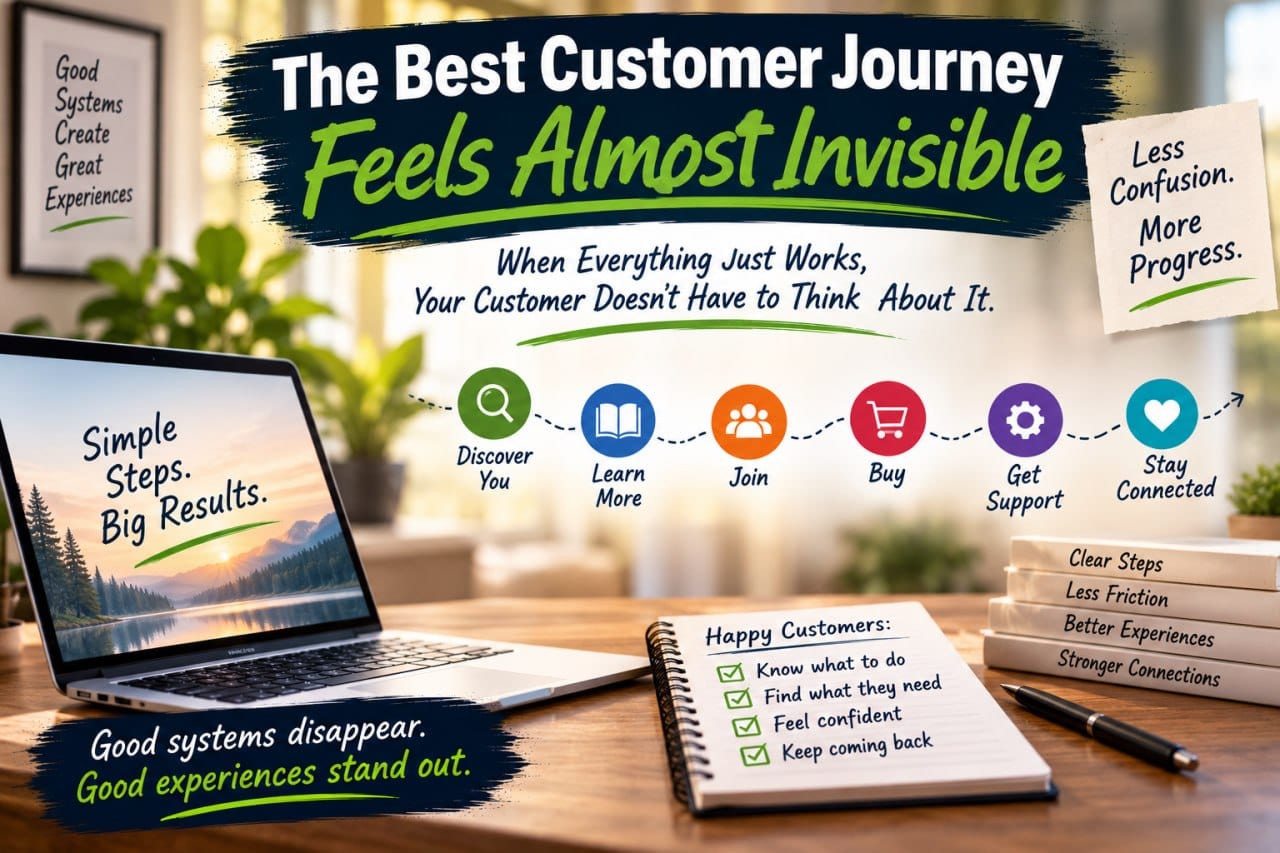
The Best Customer Journey Feels Almost Invisible
The best customer journey is one your customer barely notices. Learn how to find and fix friction points that make customers stop and ask, 'Where do I go now?'
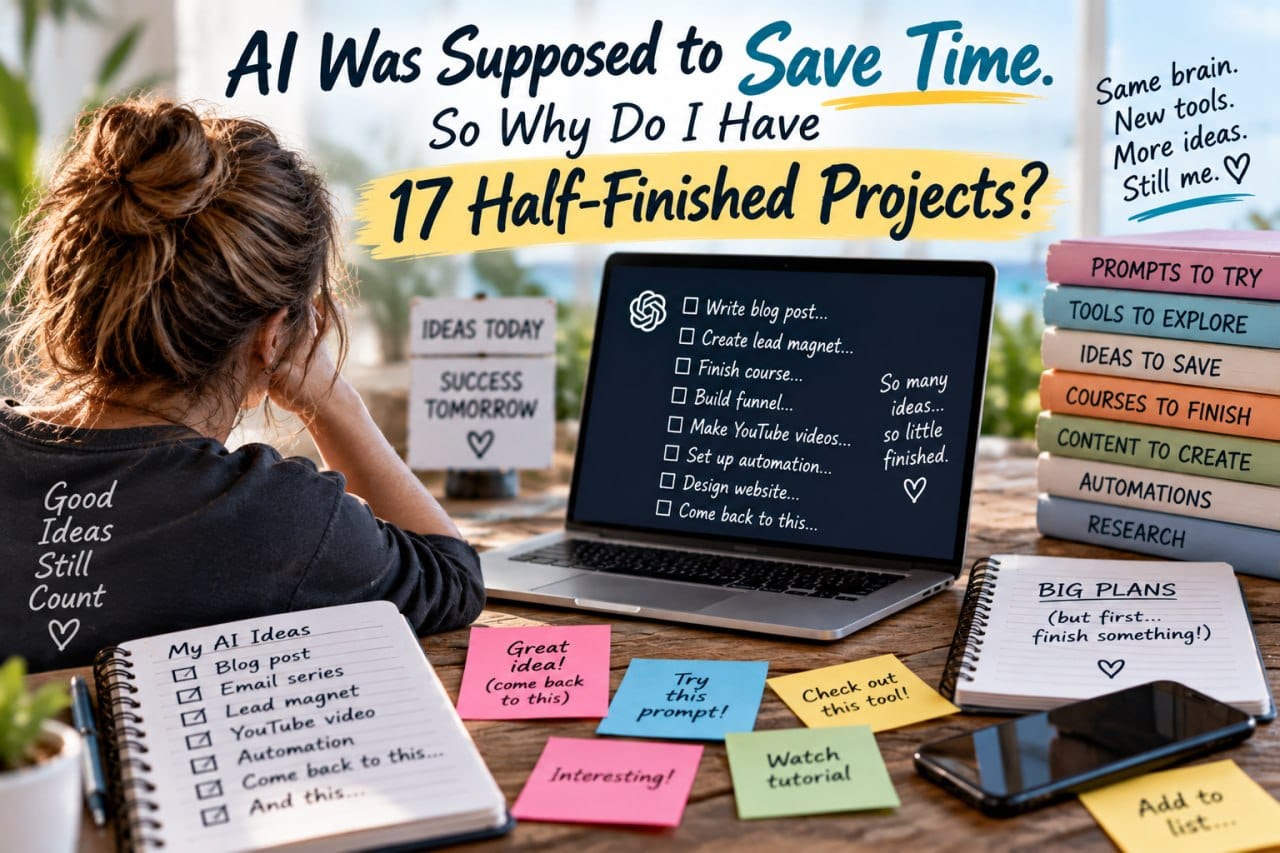
AI Was Supposed to Save Time. So Why Do I Have 17 Half-Finished Projects?
AI was supposed to save us time, but many entrepreneurs find themselves with a growing collection of half-finished AI projects. Here is why that happens and how to fix it.
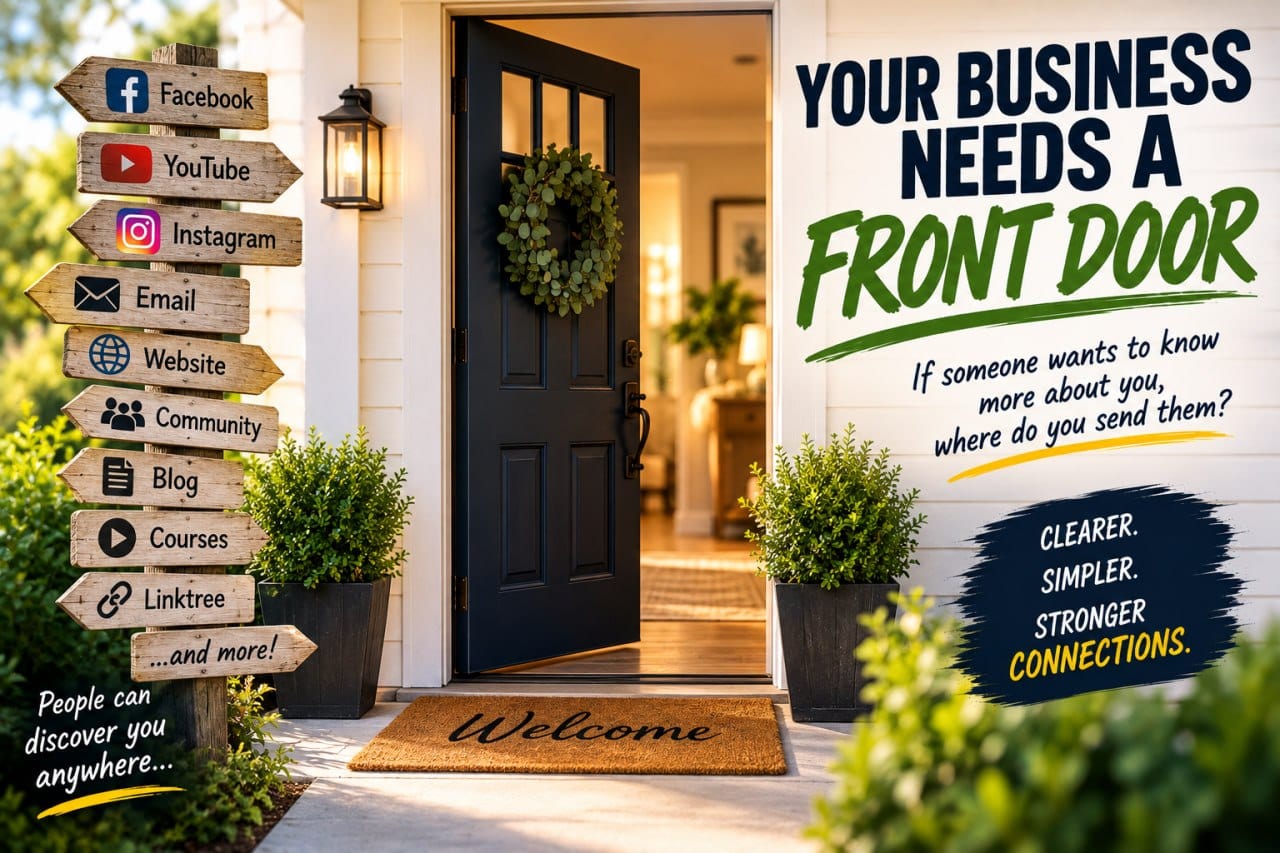
Your Business Needs a Front Door
If someone wants to know more about you, where do you send them? Here's why every business needs one clear starting point.
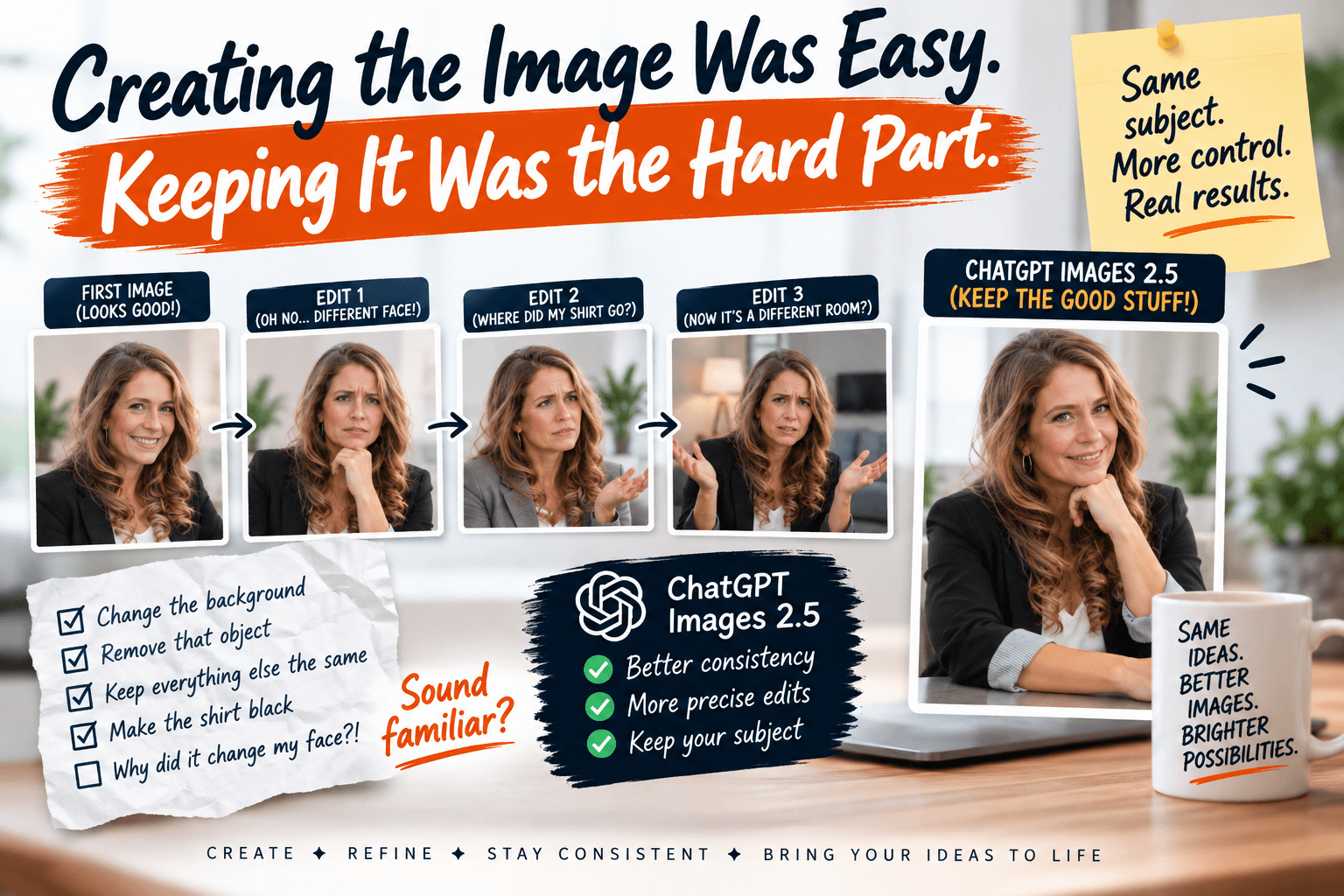
Creating the Image Was Easy. Keeping It Was the Hard Part.
ChatGPT Images 2.5 is here. Here's why the consistency improvement matters more than prettier pictures for everyday entrepreneurs.
0 Comments
Join the conversation
Be the first to comment
Share your thoughts above.