


Stop Creating More Content. Start Getting More From What You've Already Made.
How to turn one useful lesson into multiple formats without losing your voice
You spend half the morning writing a useful post. You check it twice, hit publish, and feel pretty good about it.
Then tomorrow arrives. The cursor blinks. Your brain goes blank. Apparently yesterday's brilliant idea has already retired.
Here's the part we often miss: that helpful post may have more work left in it. You don't always need another brand-new idea. Sometimes you need to get more mileage out of the good ones you've already shared.
The Content Treadmill Nobody Signed Up For
Running a business is one job. Keeping Facebook, email, a community, and maybe a video channel active can feel like four more.
Each platform seems to want something different. Facebook needs a post. Your newsletter needs a useful lesson. Video needs a script. Your community needs a reason to talk.
So you start from a blank page every time, even when you've already explained something valuable last week.
That's a lot of extra work for information your audience may not have seen. Someone who reads your emails may rarely see your Facebook posts. Someone watching short videos might never open your newsletter.
Publishing an idea once doesn't mean everyone who needs it has heard it. And it certainly doesn't mean you've used every helpful way to explain it.
The goal isn't to flood every platform with repeats. It's to give one useful lesson a fair chance to reach people in the format they prefer.
One Good Idea Can Do More Than One Job
That's where content repurposing comes in. It means taking something you've already made and adapting it for a different use.
With AI, you can turn a clear teaching tip into a Facebook post that invites conversation, a newsletter paragraph that explains the lesson, and a short video script that sounds natural when spoken.
A Facebook post might open with a question. A newsletter has room for a little more explanation. A video needs simple words and a rhythm that sounds like someone talking, not reading a manual.
The lesson stays the same. The way you deliver it changes.
Let AI Do the Reformatting, Not the Thinking
You bring the real knowledge. You know the question customers keep asking, the mistake you see often, or the process that makes a job easier.
AI can help rearrange that lesson for each format, suggest a stronger opening, or shorten a long explanation. But it shouldn't decide what is true.
If your original tip says that a quick reply helps customers know their message was received, AI shouldn't suddenly claim that faster replies double sales. Unless you have reliable evidence, that number doesn't belong there.
The same goes for invented customer stories, made-up testimonials, and results nobody actually measured. They may sound impressive. They're still fiction.
Think of AI as the person helping package your lesson, not the person inventing your experience.
Your job is to keep the meaning accurate. AI's job is to help make it easier to share.
Let's Give One Tip Three Different Jobs
Say a small business owner writes this practical lesson: When a customer sends a question, acknowledge it quickly, even if the full answer will take longer.
For Facebook, the owner might turn that lesson into a short teaching post with a friendly opening: Have you ever sent a business a question and wondered whether it disappeared into space? The post could share the tip and ask readers how they handle customer messages.
For a newsletter, the same lesson could become a short section about setting expectations. It might explain that a brief acknowledgment can say when someone should expect a fuller reply, without promising an impossible response time.
For a short video, the owner could explain the tip in everyday speech. Start with the frustration of waiting for a reply, give the one useful action, and end with a reminder to follow through.
The Facebook version starts a conversation. The newsletter version teaches a little more. The video lets people hear the advice in a natural voice.
The Part You Still Need to Check Yourself
Before publishing any AI-adapted version, read it as if you're seeing it for the first time.
Does it still teach the original lesson? Did AI add a claim, detail, or promise that wasn't in your source? Is the tone right for the people you're trying to help?
Read the video script aloud. If it sounds like a robot giving a conference speech, simplify it until it sounds like you.
Check that the original content is yours or that you have permission to reuse it. If you're adapting a customer question, remove names, private details, and anything confidential.
AI can make several versions quickly. You're still responsible for what goes out under your name.
Build a Content Library, Not Another To-Do List
You probably have more reusable material than you think.
Look through past newsletters, helpful Facebook posts, frequently asked questions, tutorials, and conversations in your community. Which ideas still solve a real problem? Which questions come up again and again?
Save the best ones in one simple document or spreadsheet. Include the original link or text, the main lesson, who it helps, and which formats you've already used.
Over time, that collection becomes a library of ideas you've already thought through, not another pile of half-finished drafts.
That's the Self Made Success approach: build a small system that helps you use what you have instead of adding more work every week.
Want to Try It With Your Own Content?
I've shared a practical set of copy-and-paste AI prompts inside the Self Made Success Community. They help you take one useful tip you've already written and adapt it into a Facebook post, an email tip, and a short video script.
The prompts are there for you to use with your own checked material. No complicated setup and no need to start with a blank page.
And remember to review every version before you share it. Your knowledge and judgment are what make the content worth reading in the first place.
Final Thoughts
More content isn't always the answer. Sometimes the smarter move is to stop letting your best ideas disappear after one post.
Let AI help with the format. Keep the lesson, the facts, and the human touch yours.
Create once with care. Make it useful more than once. |
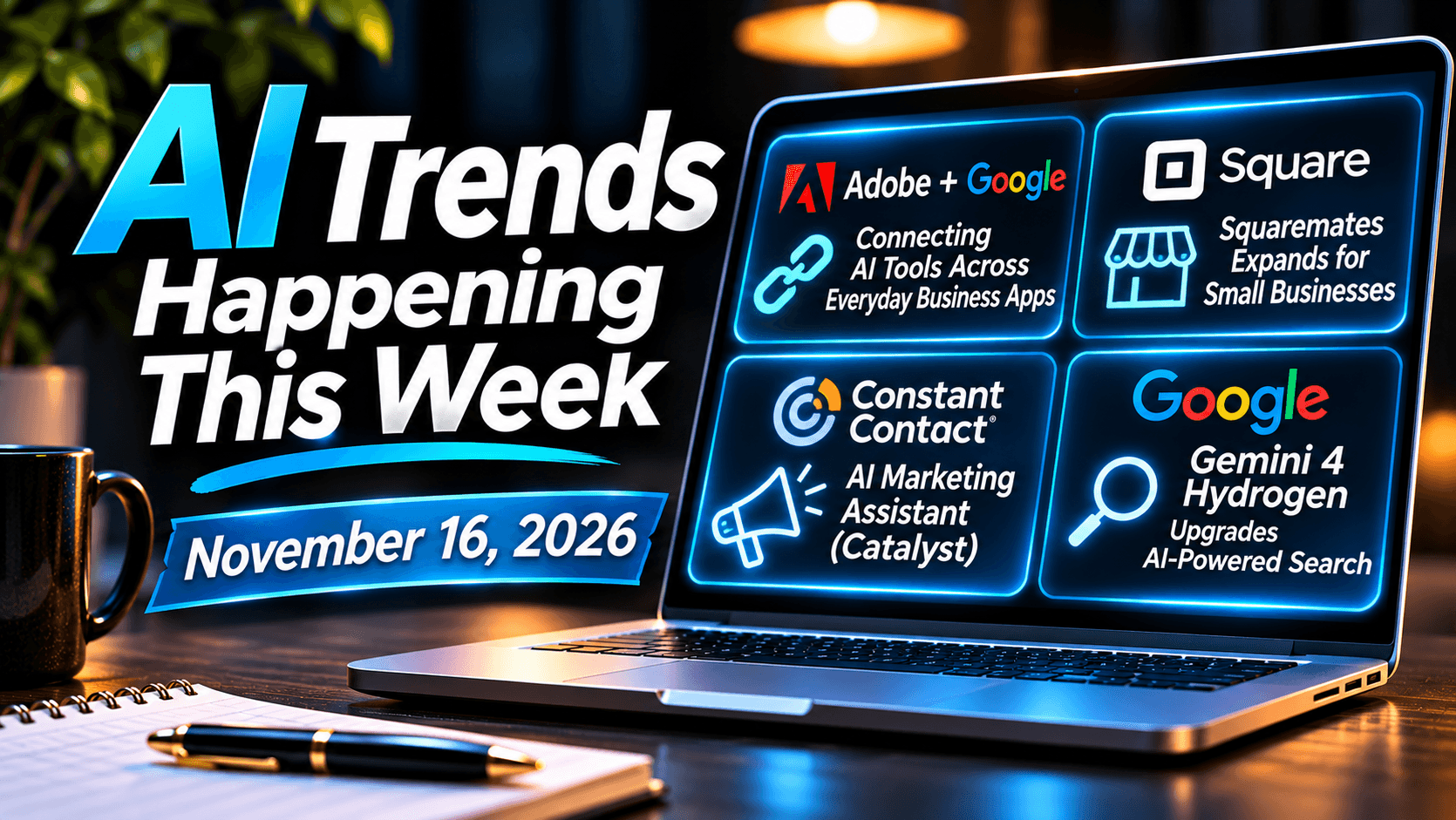
AI Trends November 16, 2026: Google, Square & Marketing
Explore four AI trends for small businesses: Adobe and Google integrations, Squaremates, Constant Contact Catalyst, and Gemini 4 Hydrogen in Search.

AI Trends November 10, 2026: Marketing, Search & Agents
Four AI trends for entrepreneurs: Adobe and Supermetrics integrations, changing Google search traffic, and new research on agents and business automation.

How to Validate a Business Idea With AI Before You Build
Learn how to validate a business idea with AI, spot weak assumptions, and test real customer demand before spending time and money building your next offer.

What Customer Questions Reveal About Your Business | SMS
Learn how repeated customer questions reveal problems in your business. Try a simple 20-minute audit to improve the customer experience without new tools.
0 Comments
Join the conversation
Be the first to comment
Share your thoughts above.