

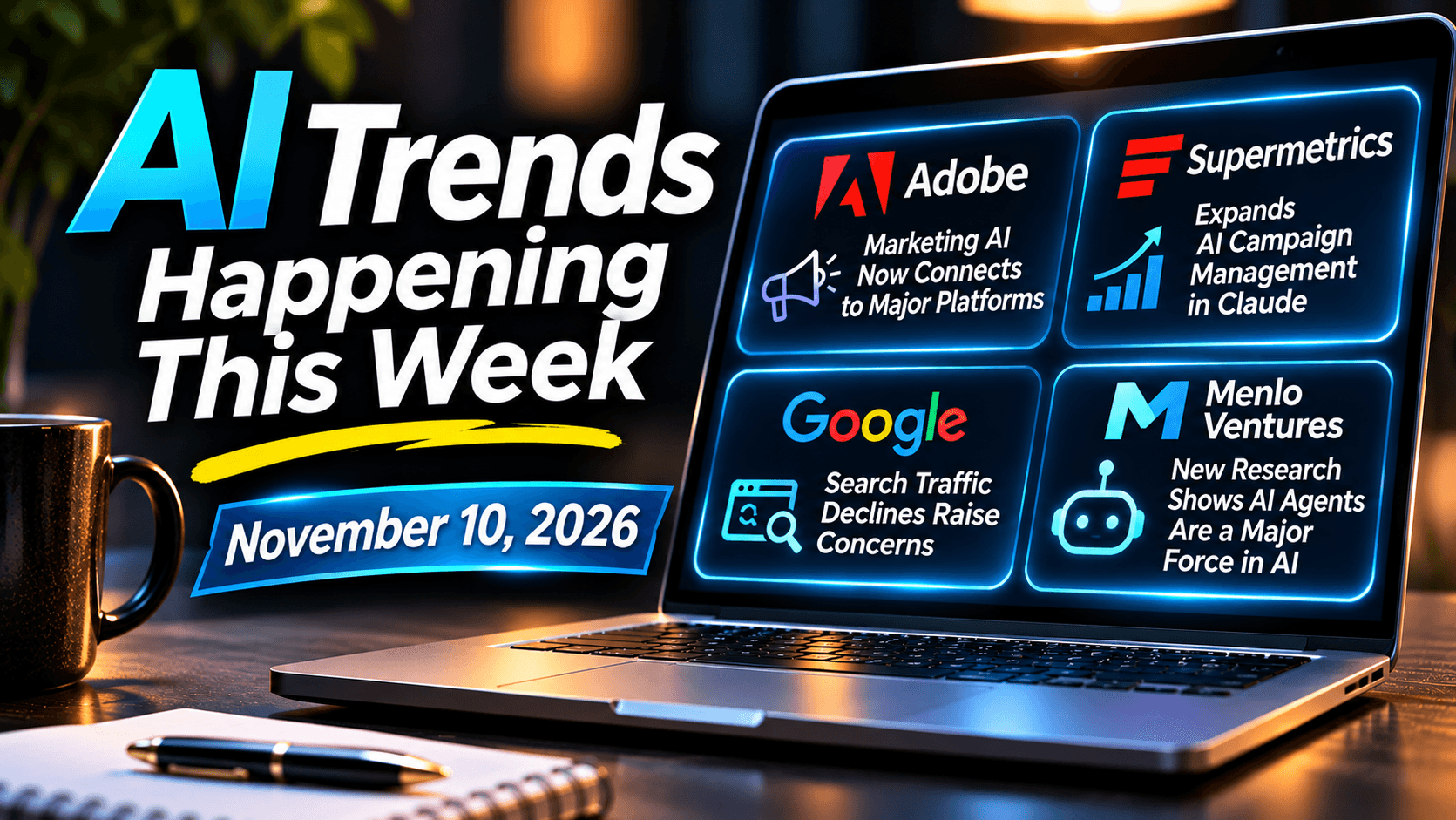
AI Trends Happening This Week: November 10, 2026
Connected marketing AI, smarter ad workflows, changing Google traffic, and the rise of AI agents
Remember when AI mostly helped write emails, brainstorm headlines, and politely tell us our ideas were brilliant?
This week, the conversation moved further into the business itself. AI is connecting marketing systems, helping prepare ad changes, and carrying out more steps behind the scenes. Meanwhile, publishers are asking a rather important question: If AI uses our content, will anyone still visit our websites?
Here are four developments from November 3 through 9 that are worth understanding, even if your business doesn't have an enterprise-sized budget.
1. Adobe Connects Its Marketing AI to ChatGPT, Claude, Gemini, and Copilot
On November 4, Adobe announced that its CX Enterprise Coworker could be accessed through major AI platforms, including ChatGPT, Claude, Gemini for business, Microsoft Copilot, and Databricks Genie.
Adobe's product connects information from its enterprise customer-experience tools. A team might ask which campaign is losing interest, where customers drop out, or which audience deserves a closer look.
Adobe also introduced ready-made connections using Model Context Protocol, or MCP, a common way for compatible AI tools to connect with other services.
There's an important catch: this is enterprise software. It isn't a free feature that appears automatically when someone opens ChatGPT. Organizations need the appropriate Adobe products, licenses, permissions, and setup. Adobe's documentation also says the AI-platform connection provides read-only customer insights, rather than directly changing customer records.
For a smaller business, the lesson isn't to buy Adobe's enterprise system. It's to notice the direction: useful AI needs reliable business information and access to the right tools.
Read Adobe's announcement and its setup documentation.
2. Supermetrics Moves Marketing AI From Reports Toward Approved Campaign Changes
On November 3, Supermetrics announced an expansion of its Claude integration. Its earlier connection helped marketers analyze data from advertising and other platforms. The next step is using that information to help create or edit campaigns.
That distinction matters. Asking AI, "Why did my ad results change?" is analysis. Asking it to prepare a revised campaign is action. And action gets a little more serious when an advertising budget is involved.
Supermetrics says more than 6,000 customers have used its Claude integration since February. That's a company-reported adoption figure, not a measure of how well every customer performed.
Its announcement describes campaign creation and editing, with new campaigns paused for approval. Businesses should confirm their access before planning around these capabilities.
Imagine a small online shop running ads on two platforms. An AI-assisted workflow might compare results and prepare a suggested change. But a person should still check the targeting, claims, spending limits, and final settings before anything goes live.
The practical lesson: connect accurate data first, let AI propose changes second, and keep approval in human hands. A fast mistake with an ad budget is still a mistake.
See the Supermetrics announcement.
3. Google Search Traffic Declines Raise New Questions for Publishers
On its November 6 earnings call, Ziff Davis, the company behind sites including CNET, PCMag, IGN, and RetailMeNot, reported that organic referrals from Google fell approximately 37% year over year in the third quarter of 2026.
Its leadership also said the company's content appeared frequently in Google's AI-powered search features. That creates a difficult situation: a website can be visible in an AI answer without receiving the visit it once might have earned.
But be careful with the numbers. The 37% figure covers Ziff Davis' Google referrals. It does not prove AI search caused the entire decline, or that every publisher is seeing the same result.
There's also a difference between an impression and a click. An impression means a link was displayed. A click means someone actually visited. Those aren't interchangeable, especially when measuring AI search.
Why should a solo creator care? If your blog earns from ads, affiliate links, or product sales, fewer visits can affect revenue even when your content is still being referenced.
The answer isn't to abandon search. It's to avoid making one platform responsible for your entire audience.
Keep publishing helpful, accurate content. But also give readers a good reason to join your email list, return directly, or participate in your community. Those relationships are yours to build over time, rather than borrowed from a search results page.
Read Search Engine Journal's analysis and Hello Partner's coverage.
4. New Research Shows AI Agents Are Doing More of the Work
On November 3, Menlo Ventures released its 2026 State of Enterprise AI report. The firm's estimate puts enterprise AI deployment spending at roughly $177 billion by September 2026, compared with $33 billion in 2025.
The report also found that agents accounted for about 80% of token usage on OpenRouter, a service that gives developers access to many AI models. A token is a small unit of text that AI systems process. This statistic describes OpenRouter traffic, not all AI use worldwide.
So what's an agent? A regular chatbot might suggest five steps for preparing a client update. An agent, if connected to the right tools and given permission, might gather information, organize it, draft the update, and flag anything needing approval.
For a small business, start with one repeatable task. Maybe it's organizing weekly customer questions, drafting a report from approved data, or preparing a newsletter checklist.
Measure how long the process actually takes, how often you need to correct it, and what the AI usage costs. If the workflow creates more cleanup than it saves, it isn't progress just because it has the word "agent" attached.
Explore Menlo Ventures' original research.
Final Thoughts: Better Connections, Not More Subscriptions
These stories point to the same change: AI is becoming part of how businesses operate, not just another window where we ask questions.
But connected tools, smarter campaigns, changing search traffic, and growing agent usage don't automatically make a business better.
The useful question is much smaller: What one repeated task could become simpler, more accurate, or easier for your customers?
Start there. Keep your data reliable, protect your customers' information, and review important decisions yourself.
You don't need five more subscriptions to keep up with AI. You need a workflow that earns its place in your business.
If you could improve one part of your business this week, what would it be? |
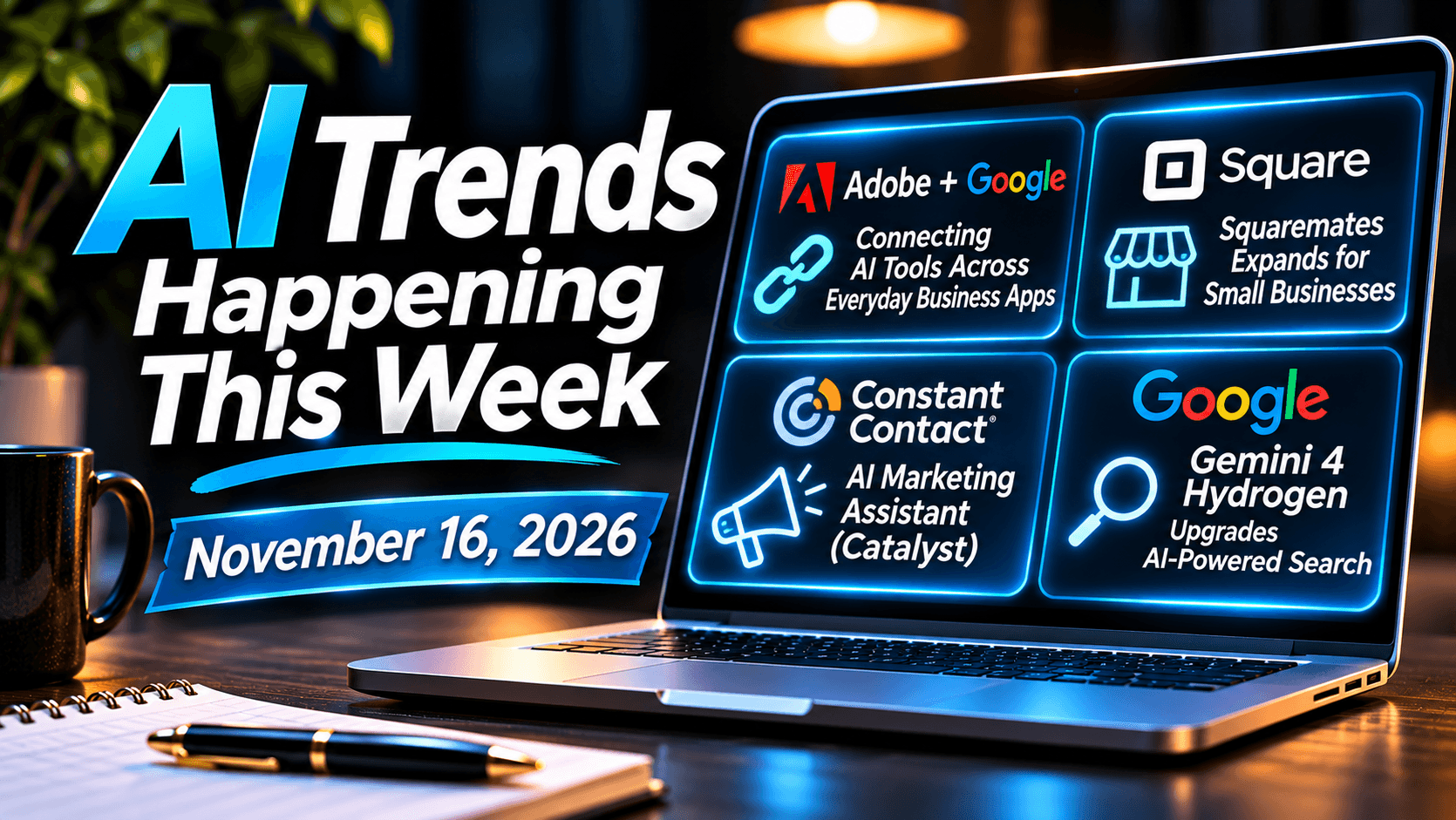
AI Trends November 16, 2026: Google, Square & Marketing
Explore four AI trends for small businesses: Adobe and Google integrations, Squaremates, Constant Contact Catalyst, and Gemini 4 Hydrogen in Search.
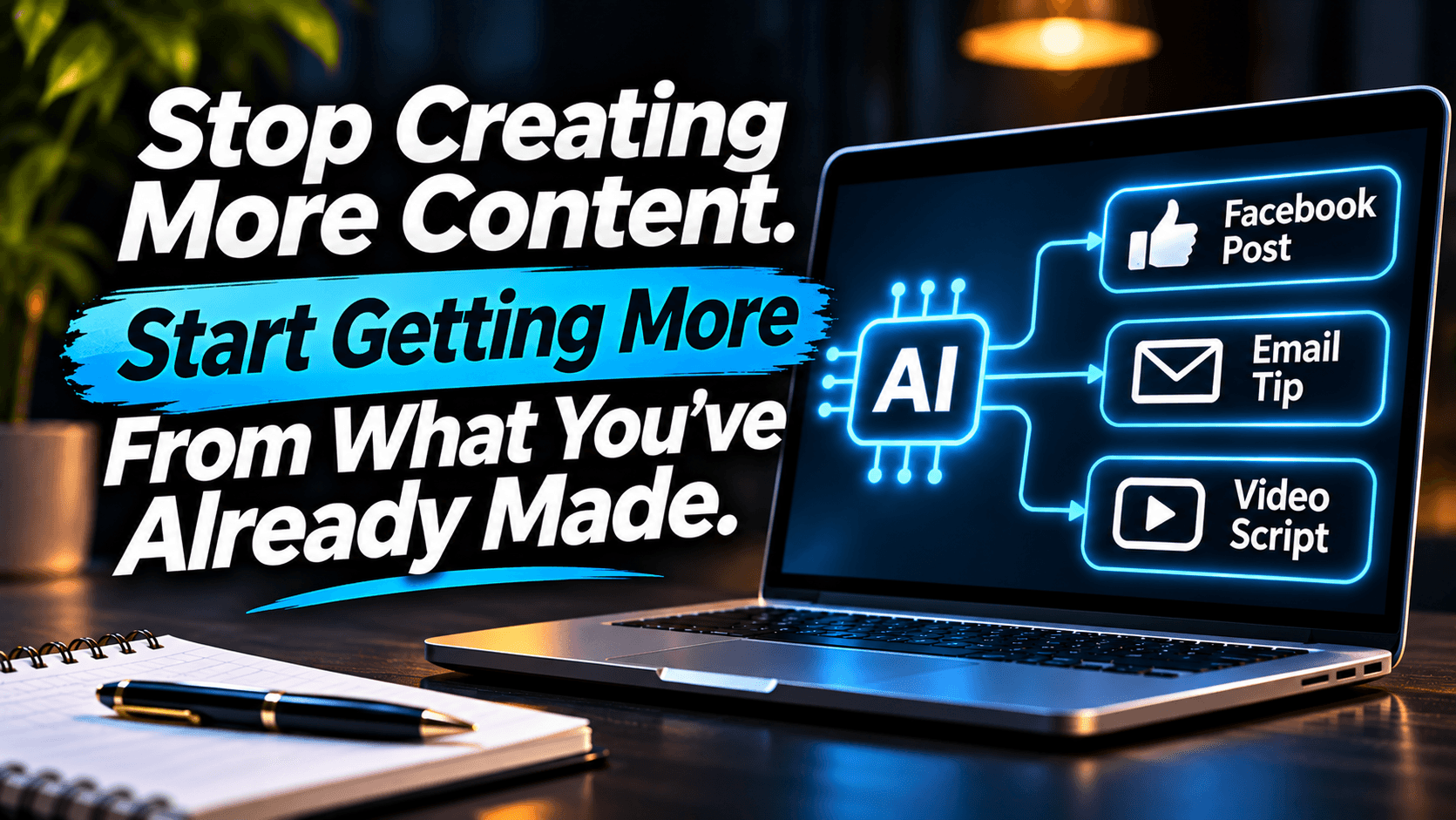
How to Repurpose Content With AI Without Starting Over
Learn how to repurpose content with AI, turning one useful tip into Facebook posts, newsletter sections, and short videos while keeping your message accurate.

How to Validate a Business Idea With AI Before You Build
Learn how to validate a business idea with AI, spot weak assumptions, and test real customer demand before spending time and money building your next offer.
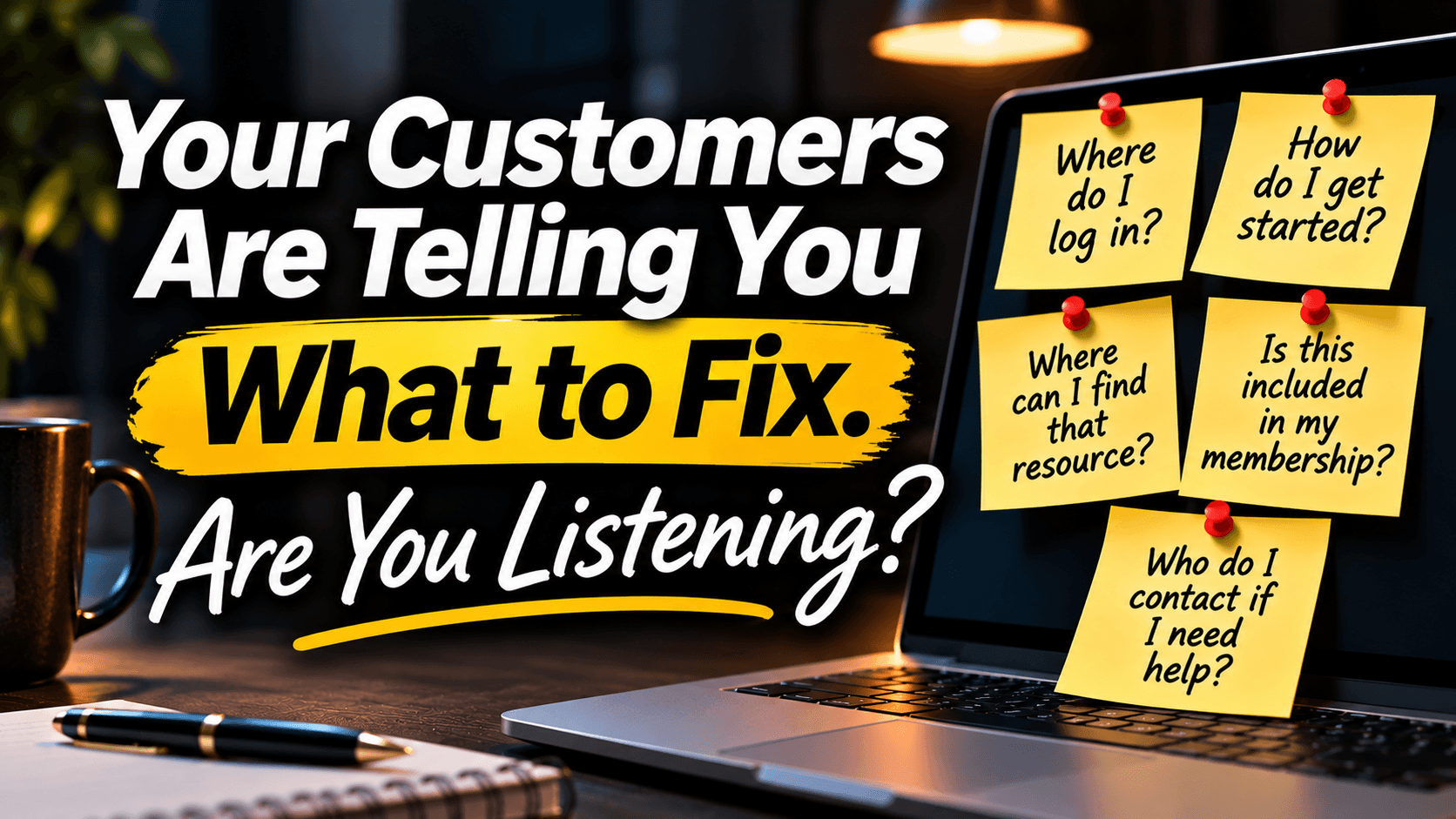
What Customer Questions Reveal About Your Business | SMS
Learn how repeated customer questions reveal problems in your business. Try a simple 20-minute audit to improve the customer experience without new tools.
0 Comments
Join the conversation
Be the first to comment
Share your thoughts above.