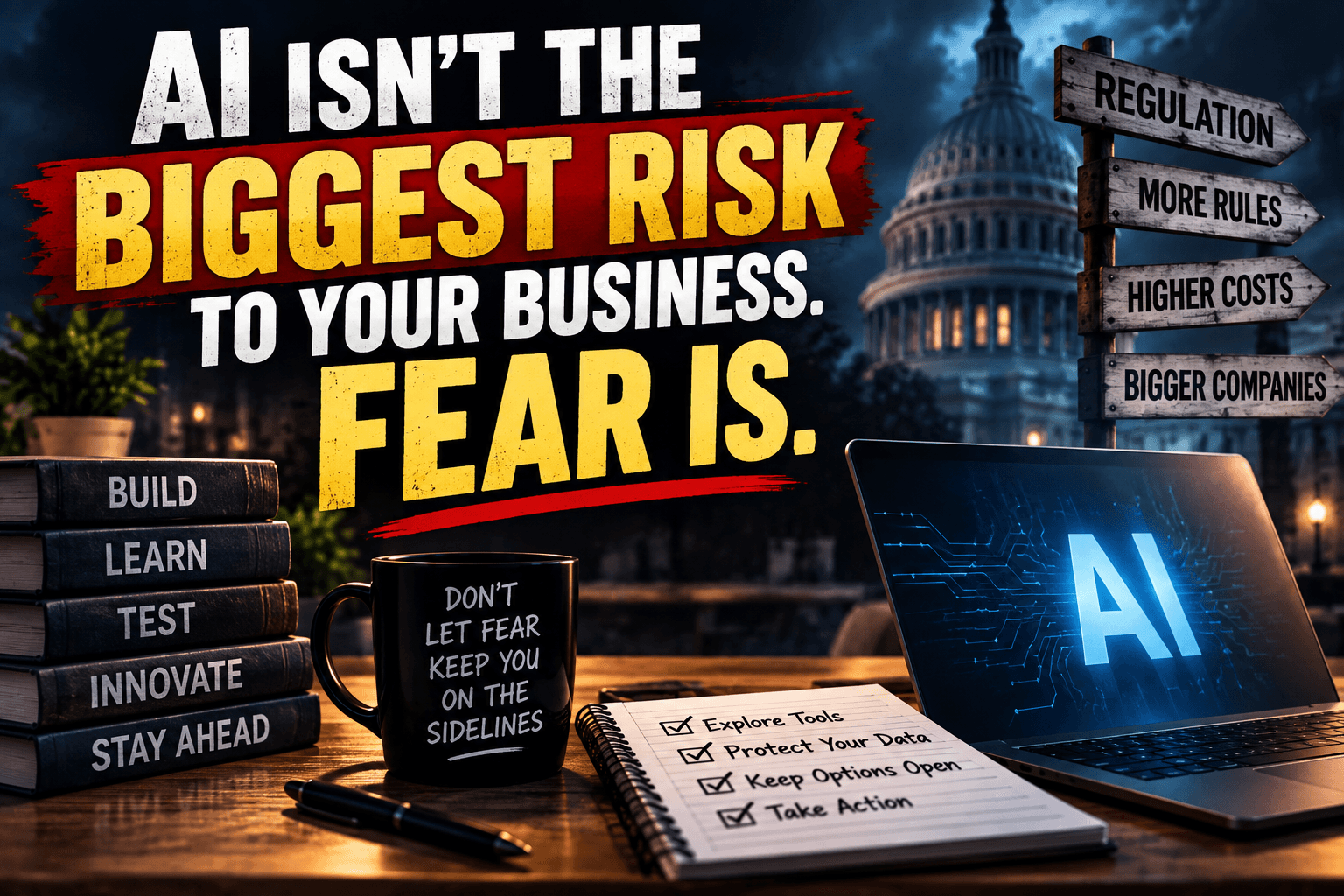
AI Isn’t the Biggest Risk to Your Business. Fear Is.
AI regulation and business innovation are changing fast, but entrepreneurs who keep learning instead of freezing may have the bigger advantage
There is no shortage of reasons to be nervous about AI right now.
One day it is going to replace your job, the next day it is going to change the world and by Friday somebody is warning that it may be too powerful to control.
If you are trying to build a business in the middle of all that noise, doing absolutely nothing can start to feel strangely responsible.
That may be the bigger risk.
Recently, the debate over AI regulation took an interesting turn when the chairman of the Federal Trade Commission warned against rushing into rules that could unintentionally help the biggest AI companies protect their position from smaller competitors.
His concern was simple: large companies can afford lawyers, compliance departments, audits and mountains of paperwork that a small startup cannot.
That does not mean regulation is bad, and it certainly does not mean AI has no real risks.
It means entrepreneurs should learn to separate legitimate concerns from fear that leaves them standing still.
We have seen versions of this before.
When federal tobacco regulation was being debated years ago, the largest cigarette manufacturer supported the new framework while some competitors argued the rules could reinforce the market leader’s advantage.
The industries are completely different, but the business lesson is worth noticing.
Rules can protect consumers while also creating costs that are much easier for giant companies to absorb.
That is why I think small business owners need something more useful than either blind excitement or panic when it comes to AI.
We need skepticism.
Fear says, “I better wait until all of this settles down.”
Skepticism says, “I am going to learn how this works, test it carefully and decide for myself.”
Those two reactions look similar from a distance, but they lead to completely different places.
Fear freezes you.
Skepticism keeps you sharp.
While one business owner is waiting for someone to declare AI completely safe, completely settled and completely predictable, another is quietly learning how to answer customers faster, research ideas, improve content, create better follow-up and remove repetitive work.
Six months later, the difference may not be who had access to better technology.
It may simply be who started learning first.
This does not mean handing your entire business to a chatbot and heading to the beach.
Please do not let AI run the company while you are looking for your flip-flops.
Use the tools, but check their work.
Protect sensitive information, keep copies of important data, understand what you are connecting to your business and avoid becoming so dependent on one platform that a price increase or policy change can wreck your workflow.
And perhaps most importantly, try more than one tool.
The biggest name is not automatically the best answer for every job, and business innovation often happens when smaller competitors challenge what the established players are doing.
Your experience still matters.
Your knowledge of your customers still matters.
Your judgment still matters.
AI can make those things move faster, but it should not replace them.
So yes, pay attention to the warnings.
Pay attention to regulation, privacy, security and what these companies are doing with the technology.
But do not let the constant stream of scary headlines convince you that the safest place for your business is on the sidelines.
AI may change your business, but fear can stop you from changing at all.
And right now, that may be the risk worth watching most closely.
Want to keep learning without figuring it all out alone?
That is exactly why we built the Self Made Success community, a place for entrepreneurs to learn, share what is working and keep moving forward together.
Come join us inside the Self Made Success community. |
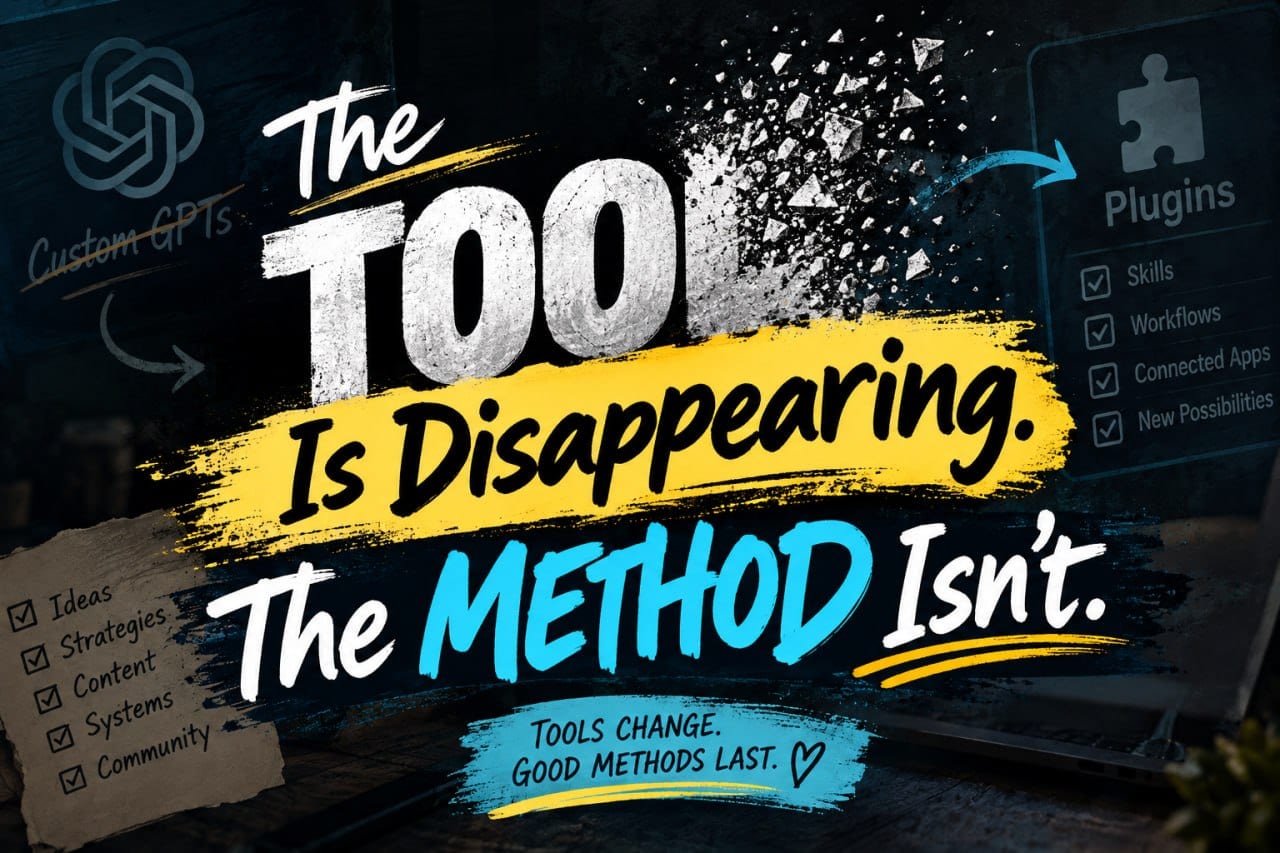
The Tool Is Disappearing. The Method Isn't.
OpenAI is retiring Custom GPTs on December 11, 2026. I built one for my Rapid Content Method course, and now I'm figuring out what comes next. The bigger question: Do you own the method, or only the container?
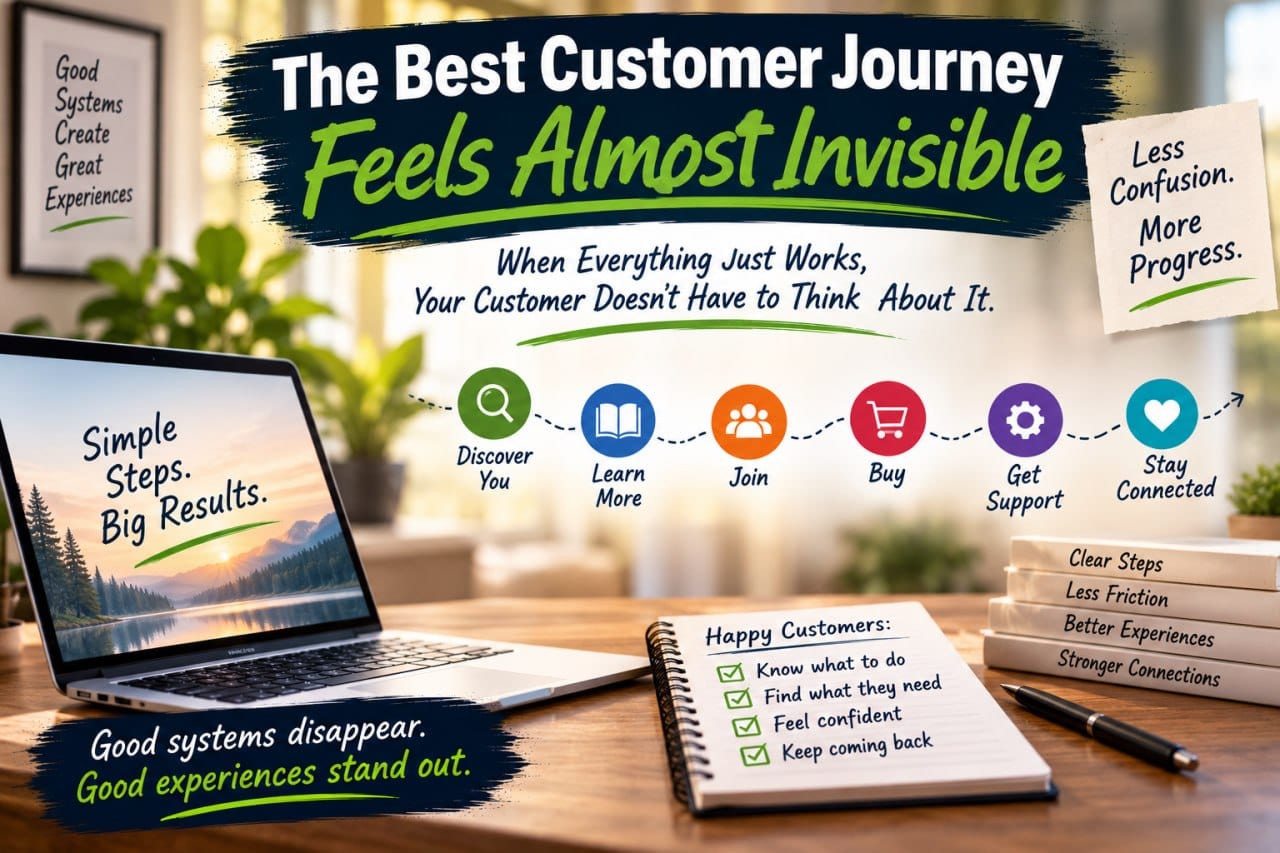
The Best Customer Journey Feels Almost Invisible
The best customer journey is one your customer barely notices. Learn how to find and fix friction points that make customers stop and ask, 'Where do I go now?'
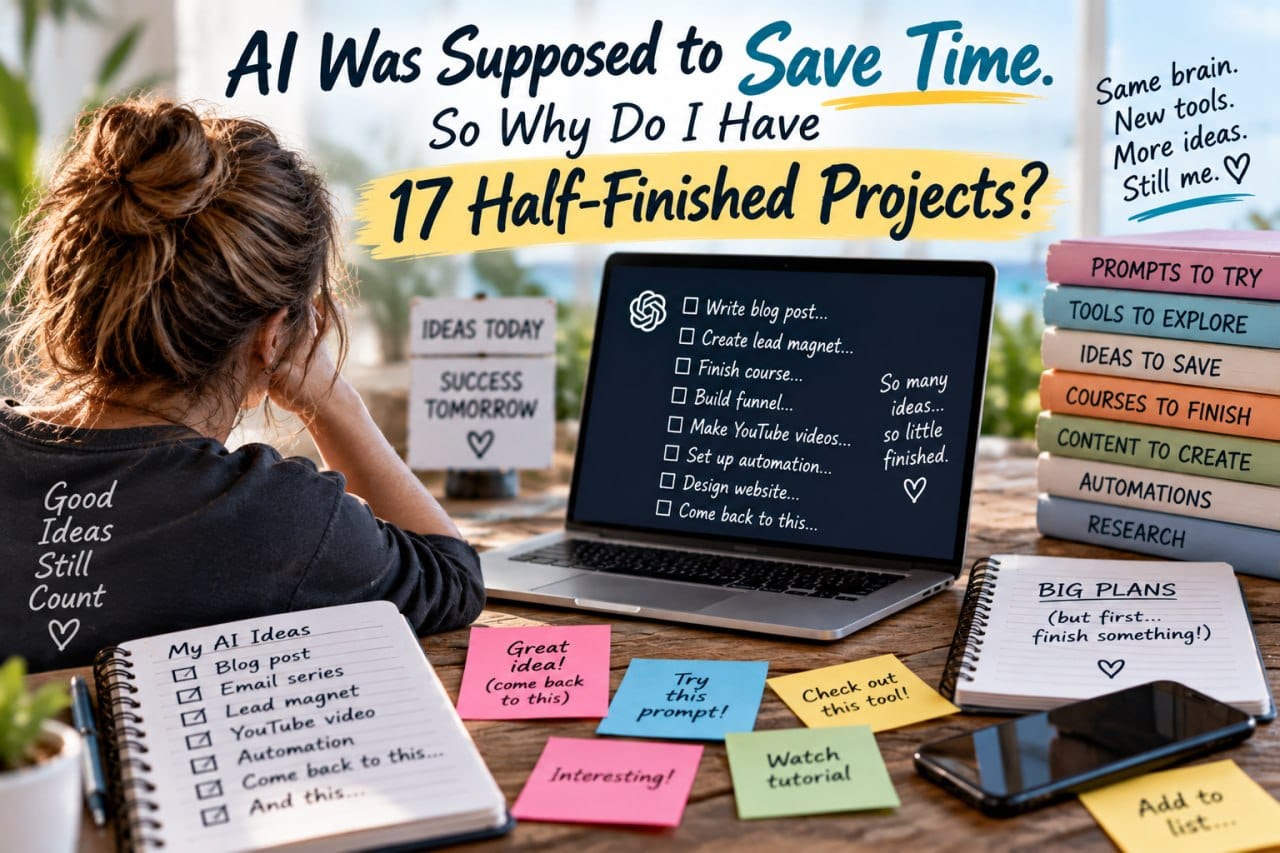
AI Was Supposed to Save Time. So Why Do I Have 17 Half-Finished Projects?
AI was supposed to save us time, but many entrepreneurs find themselves with a growing collection of half-finished AI projects. Here is why that happens and how to fix it.
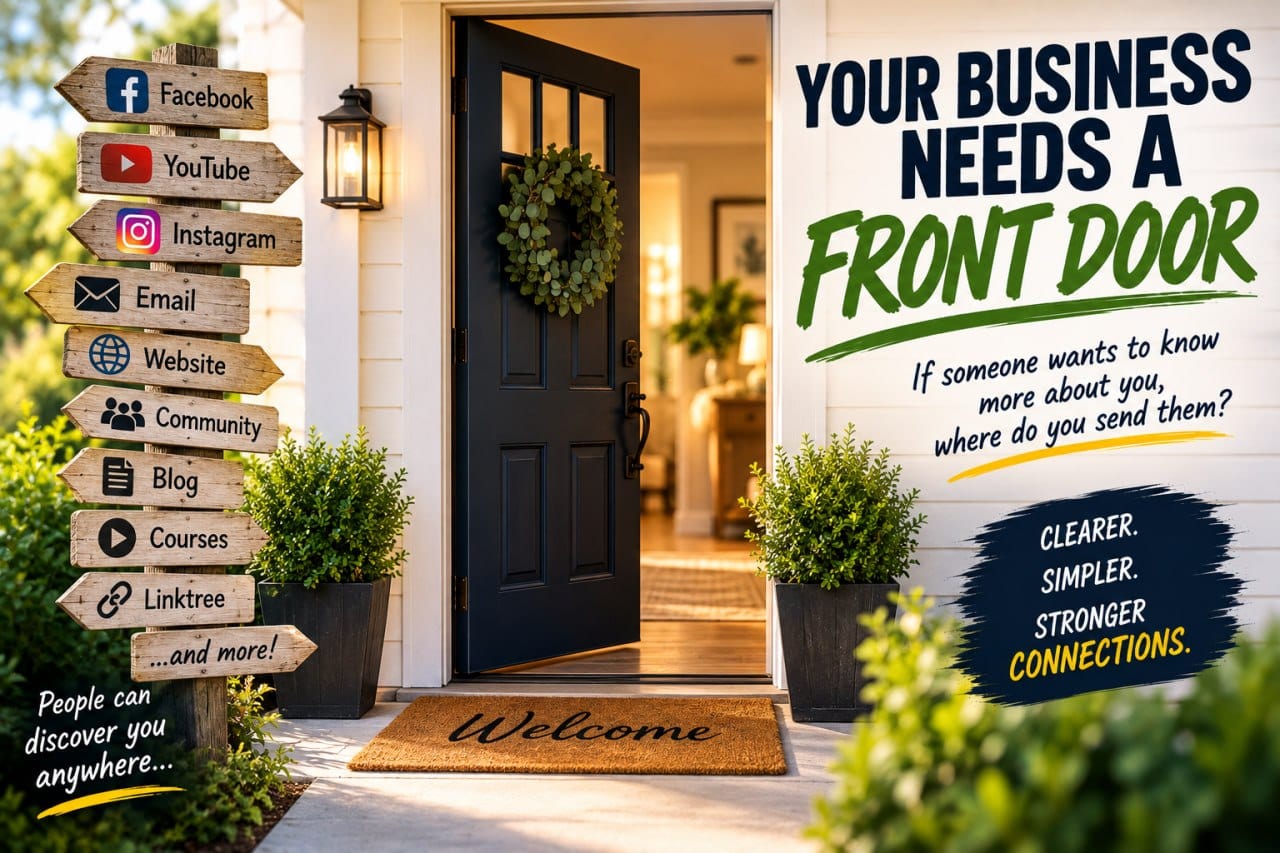
Your Business Needs a Front Door
If someone wants to know more about you, where do you send them? Here's why every business needs one clear starting point.
0 Comments
Join the conversation
Be the first to comment
Share your thoughts above.