
Stop Asking One AI Tool to Do Everything. Build a Workflow That Actually Works.
How to make your AI tools work together without adding more complexity to your business
Five AI tabs are open. You've got three versions of the same newsletter and you can't remember which tool wrote the good one.
So you open another tab to ask AI how to organize your AI tools.
Sound familiar?
The tools aren't necessarily the problem. The missing piece might be a clear process.
More Tools Don't Always Mean Better Results
AI can brainstorm ideas, organize notes, draft content, create graphics and help review work.
But different tools have different strengths, limits and costs. And one capable tool might handle several jobs perfectly well.
Instead of asking, "Which AI tool should I buy next?" ask, "What am I trying to finish and what's the simplest way to get there?"
Start with the job, not another subscription.
Give Each Stage a Job
An AI handoff workflow is simply a process where one step produces something useful for the next.
Imagine preparing your weekly business newsletter.
Stage 1: Discover. Gather topic ideas, find relevant information and choose what readers actually care about.
Stage 2: Create. Turn those notes into a draft, then improve the writing, examples and personality.
Stage 3: Review. Check important facts against reliable original sources, fix weak spots and prepare the content for publishing.
You could use three tools, two tools or different features inside one platform.
The point isn't collecting tools. It's giving each stage a purpose.
And don't skip the human review. AI can miss errors, even when it sounds completely confident.
Don't Lose the Plot Between Tools
Here's where things get messy.
One tool knows your audience. The next has no idea who you're talking to.
Your original notes include sources but the final draft loses the links. Your friendly voice suddenly sounds like a bank's legal department.
A useful handoff carries the important details forward:
Who it's for. What you're trying to achieve. Your brand voice. Key facts and links. What the finished result should look like.
Think of it as handing someone a clear set of notes instead of expecting them to read your mind.
That's what makes a workflow repeatable rather than a fresh guessing game every week.
Test Before You Automate
Choose one task you do regularly. Maybe it's a newsletter, a client update or a weekly social post.
Try the stages manually a few times. Notice what saves time, what needs fixing and where you still have to redo the work.
If three tools create more copying, checking and confusion than one, simplify.
After all, adding four subscriptions and six passwords isn't exactly the freedom we signed up for.
Only automate the parts that already work well. Automating a messy process just makes the mess move faster.
The Missing Piece: Knowing What to Ask
A useful workflow needs clear instructions at every stage.
What should this step accomplish? What information must move forward? How will you know the result is good enough?
That's why reusable instructions matter more than a pile of clever one-time requests.
I've shared a set of practical prompts inside the Self Made Success Community to help you choose tool roles, plan handoffs, build reusable instructions, evaluate results and improve your process.
For now, pick one recurring task and write down its three main stages.
You don't need an AI circus. You need a process that works.
Want to build your own AI workflow without starting from scratch? Get the prompts inside the Self Made Success Community. |
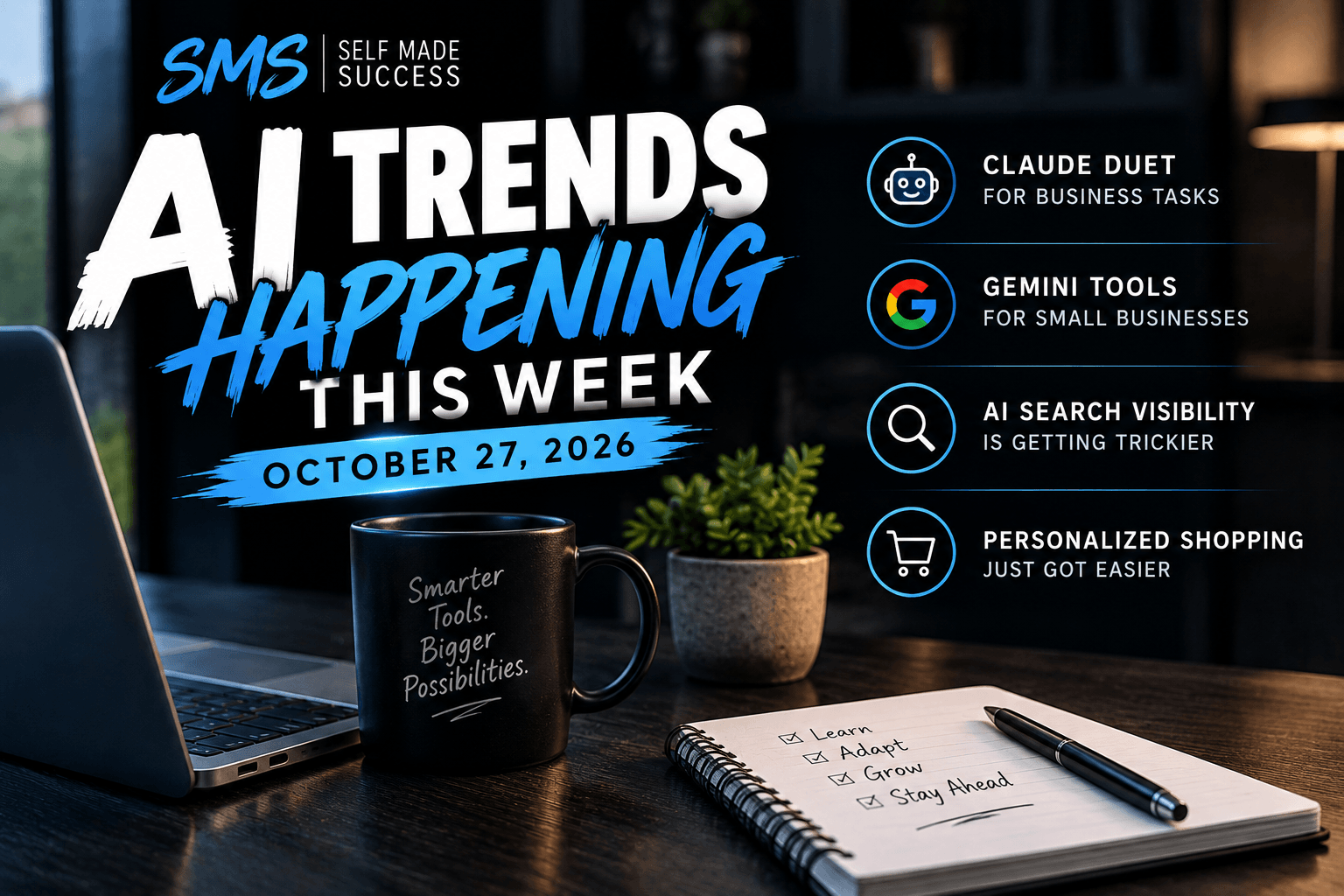
AI Trends October 27, 2026: Agents, Gemini, Search & Shopping
Explore four AI trends for entrepreneurs this week: Claude Duet, new Gemini business tools, changing AI search visibility, and smarter shopping quizzes.

5 Questions to Ask Before Adding Tools to Your Business
Before adding another business tool or strategy, use these five practical questions to save time, reduce clutter, and improve your customer experience.

How to Find a Business Idea in Skills You Already Have
Learn how to find a business idea in skills you already use, turn them into a clear offer, and test real customer demand before building a business.

Customer Experience: Stop Sending Buyers on a Treasure Hunt
Improve your customer experience with a simple five-step test that reveals confusing logins, missing resources, and roadblocks after a purchase.
0 Comments
Join the conversation
Be the first to comment
Share your thoughts above.